An all-in-one web-based platform for Malware & Security Monitoring, Hacking Remediation, Website Protection and other critical services for a safe and trusted website. Sputniki klyuchi biss 60 gradus 1. Malware clean-up and hacking recovery plans.
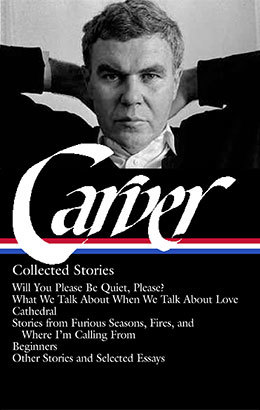
Errand 1987 “Errand” originally appeared in The New Yorker in June 1987. It is the last story wrote and is included in his collection of short stories Where I’m Calling From, published just a few months before Carver died in 1988. It was also included in The Best American Stories, 1988 and received first prize in Prize Stories 1988: The O. Henry Awards. A partly fictionalized account of Russian writer Anton Chekhov’s death, “Errand” is unlike any other Carver story. Carver claimed that he was inspired to write the story while reading Henri Troyat’s biography of Chekhov, one of Carver’s literary idols. The narrative voice of “Errand” is that of a historian, appropriate for a historical story but unusual for Carver in that he seldom wrote explicitly about famous people or mixed fact and fiction in such an obvious manner.
Carver details Chekhov’s descent into illness and his eventual death in the town of Badenweiler, Germany in 1904. With Chekhov in bed dying, his wife, Olga Knipper, sends a Russian bellboy on an errand to secure a mortician, hence the story’s title.
By Raymond Carver The New Yorker, June 1, 1987 P. 30 In March of 1897 Chekhov was dining at an elegant restaurant in Moscow when blood began gushing from his mouth. A study guide for raymond carver s errand Download a study guide for raymond carver s errand or read online books in PDF, EPUB, Tuebl, and Mobi Format. Click Download or Read Online button to get a study guide for raymond carver s errand book now.
The menu is in english and chinese. Razdevayut li do gola na prizivnoj komissii lyrics.
Carver draws on a number of historical sources including Chekhov’s own writing, Chekhov’s sister Maria Chekhov’s Memoirs, Leo Tolstoy’s journals, and Troyat’s biography. Through writing an imaginative account of a well-known person’s death, Carver provokes readers to think about the relationship between literature and history and to imagine how they would respond to another person’s death. Critics consider “Errand” to be one of Carver’s best stories and one that will stand the test of time. Raymond Carver’s spare, realistic stories about the hardscrabble lives of the working class are rooted in his own experience. Born in Clatskanie, Oregon, May 25, 1938, to Clevie Raymond Carver and Ella Beatrice Casey, Carver was raised in Yakima, Washington.
His father, who suffered from alcoholism, worked in a sawmill, and the family was often financially strapped. A combination of marital difficulties, heavy drinking, and poverty contributed to Clevie Carver’s emotional breakdown in 1957. That year, Raymond married sixteen-year-old Maryann Burk, and they had their first child, Christine LaRae Carver, who was born in the same hospital in which Carver’s father was being treated. Their second child, Vance Lindsay, was born a year later. Carver was only twenty years old, but already he had two children.
He was destined to repeat the pattern of his father’s life: drinking heavily, working in low-paying jobs, and moving his family frequently. Carver writes that his children were the single biggest influence on his writing. The second biggest was the novelist with whom Carver studied at Chico State College in 1959.
Gardner provided the encouragement and discipline to write that Carver needed at that point in his life. Always looking for a better way to support his wife and two children as well as stronger opportunities for himself, Carver moved his family around in the next few years, taking a job at a sawmill in Eureka, California, before moving to Arcata, California, where he enrolled at Humboldt State University. In 1963, he graduated with a degree in English, then moved his family to Iowa City to begin graduate work at the Iowa Writer’s Workshop. During the 1960s, Carver worked at a number of jobs including hospital custodian and editor for a textbook company. In 1970, Carver was awarded a National Endowment for the Arts Discovery Award for poetry, and his first book, Winter Insomnia, was published by Kayak Books. Although plagued by financial difficulties, continuing marital problems, and alcoholism, Carver continued writing and garnering recognition for his work.